
Few carburettors capture the imagination like the Weber DCOE. Those two horizontal bores, the instant throttle response, that unmistakable induction roar at full throttle. From Alfa Romeo and Escort RS to Jaguar and Ferrari: if you are after performance and character, you end up at the DCOE. In this article we show you how to identify one and where the art of tuning lies.
The Weber DCOE on film · six of them on the Ferrari's V12.
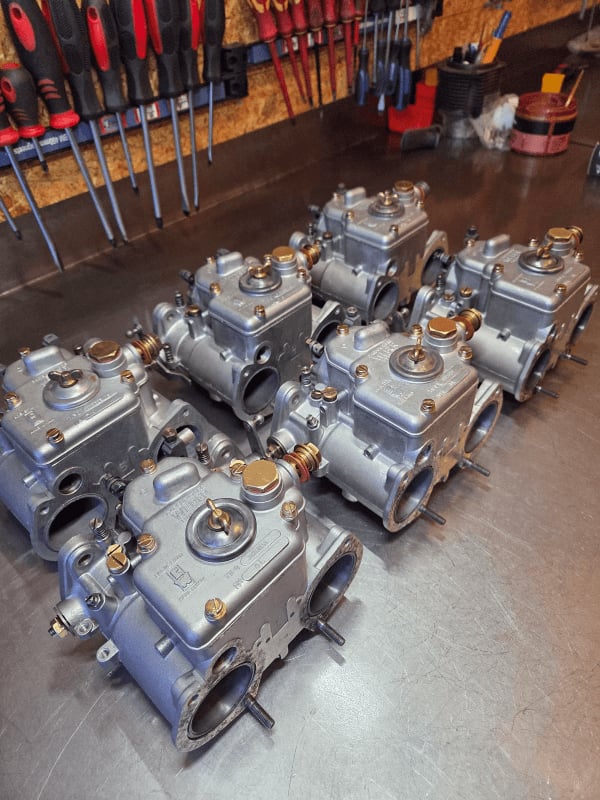
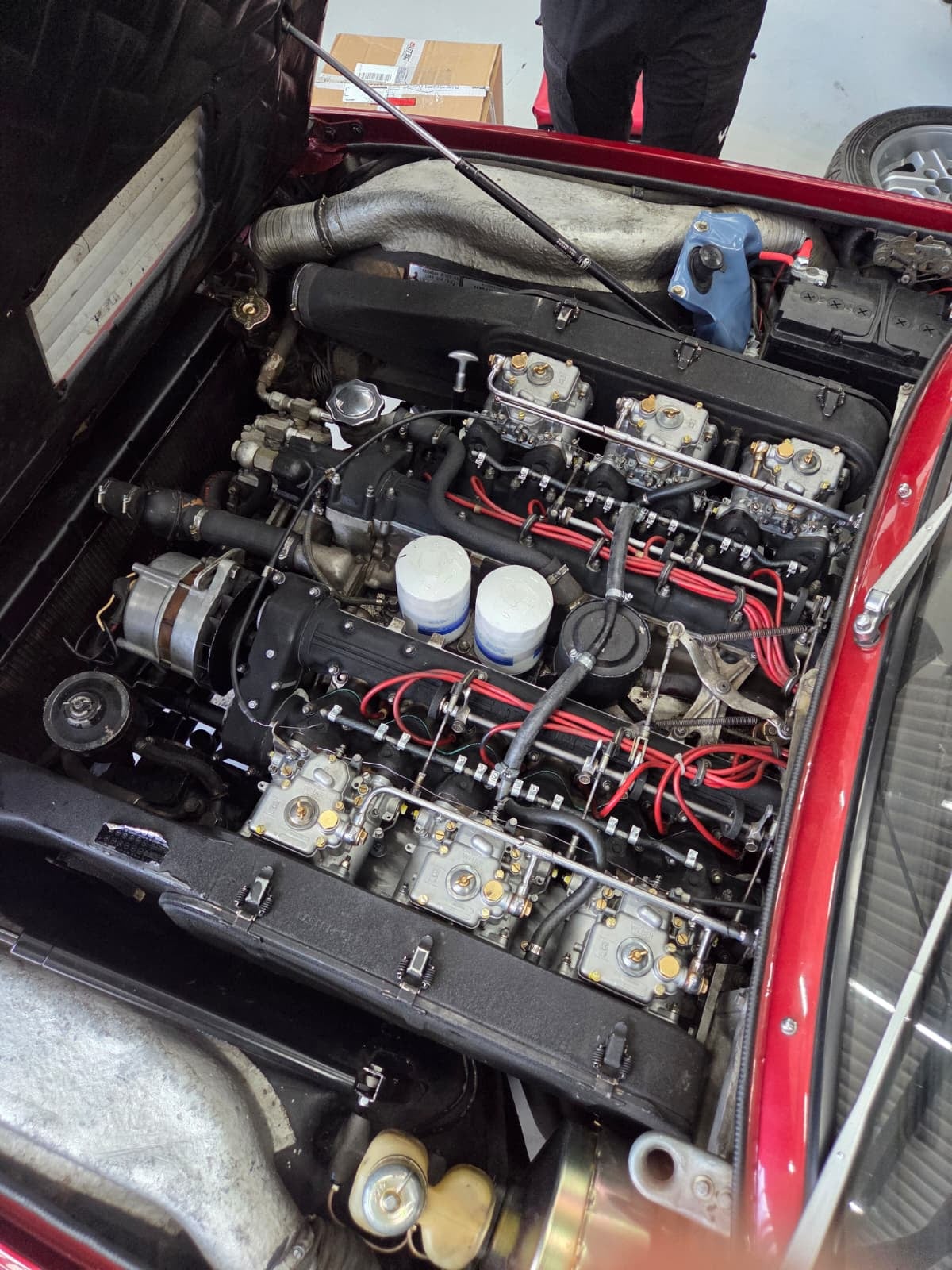
The set of six where it all began: a Ferrari 365 GT4 (1975) with a history going back to Niki Lauda · and this is how the six DCOEs sit back on the V12.
What is a Weber DCOE?
The DCOE is a sidedraught carburettor: the air flows through it horizontally, straight towards the inlet port. Every DCOE has two bores (twin-choke), so one carburettor feeds two cylinders, with each bore serving its own cylinder. That short, straight inlet tract is exactly why it responds so directly and fills so well at high revs. You will often find them in a bank of two, three or even six side by side.
Which classics carry the DCOE from the factory?
A selection from the car world where the Weber DCOE (or the older DCO3 variant) came as standard or as a much-loved upgrade:
- Alfa Romeo
- Giulia, Giulietta, Spider, Alfetta, Bertone GTV
- Ford
- Escort RS, Lotus Cortina, Capri, Escort Mexico
- Lotus
- Elan, Europa, Esprit
- BMW
- 2002, E10 series, E21 (such as the 316 and 320)
- Fiat
- 124 Spider and Abarth, 131 Abarth, Strada / Ritmo Abarth 130 TC
- Aston Martin, Ferrari, Maserati
- Various classic V8 and V12 models from the 1960s and 70s, often with multiple DCOEs or the older DCO3 variant
- Talbot / Sunbeam
- Sunbeam Rapier H120
- Mercedes-Benz
- 190SL, as a popular conversion kit
Spotting a genuine Weber from Bologna
The casting of an original Weber tells you straight away. Look for the text "CARBURATORE WEBER BOLOGNA", the marking "BREVETTATO" (patented) and "MADE IN ITALY", plus a TIPO and N° stamp with the type and serial number. From that type number we can tell at a glance which version it is and which jet set belongs in it.
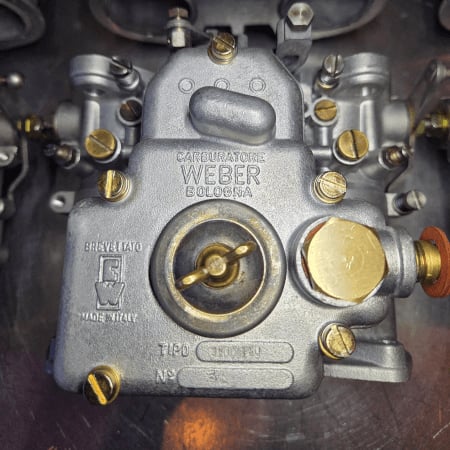
Bologna or Spain? There is a difference
We overhaul both the original Italian Webers from Bologna and the later versions by Webcon from Spain. Both are perfectly usable, but there is a difference. The Italian Webers are known for their precise fit and smooth running, even after years in storage. On the Spanish remakes we more often see a little more play on the throttle spindles and a slightly looser fit, so they need a touch more attention to idle perfectly. That is exactly where our craftsmanship comes in.
The art of tuning
A DCOE is no black box, but a precision instrument you can match to the engine. You determine the performance and road manners with a handful of interchangeable parts. This is what it is all about:
The adjustable leading players
- Venturi
- The narrowing that determines the air speed through the bore. A larger venturi gives more top-end power, a smaller one gives sharper response and better filling low in the rev range. (Not to be confused with a choke, which is the cold-start enrichment.)
- Main jet
- Controls the fuel supply at (nearly) full throttle. Too small makes the mixture lean, too large makes it rich.
- Air corrector jet
- Corrects the mixture as the revs climb, so it stays in trim at the top end rather than going too rich.
- Emulsion tube
- Mixes the fuel with air before it reaches the jet. Its shape and drillings determine the character across the entire rev range.
- Idle jet
- Looks after the idle and the transition to the main system. Crucial for a clean, stable idle.
- Accelerator pump
- Delivers that extra squirt of fuel the moment you open the throttle suddenly, for instant response without a flat spot.
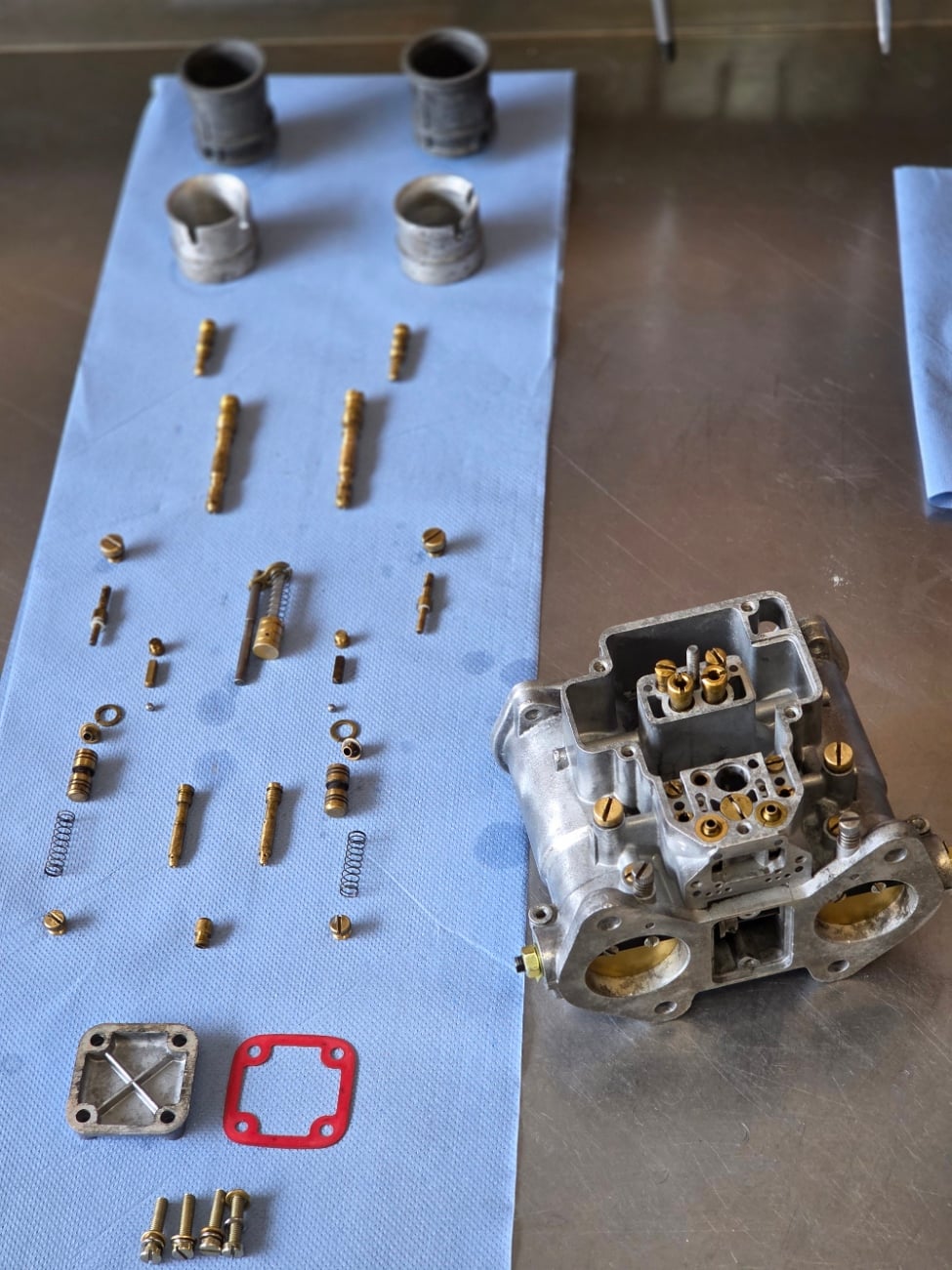
The art lies in the balance: a venturi that suits your engine and your use, a jet set that matches it neatly, and throttle spindles without play so all the throttle butterflies open exactly in step. Measure, try, measure again. That is how you get the most out of a DCOE without giving up reliability.
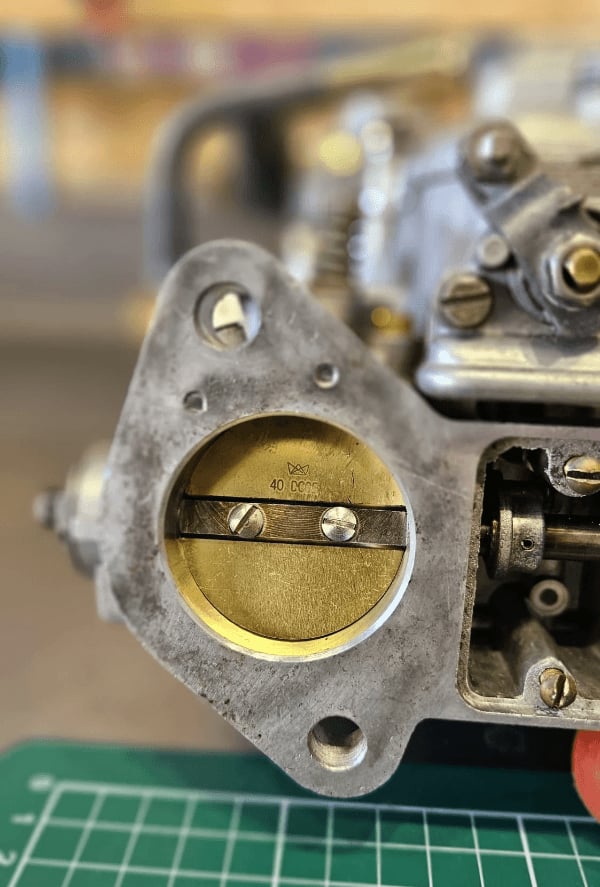
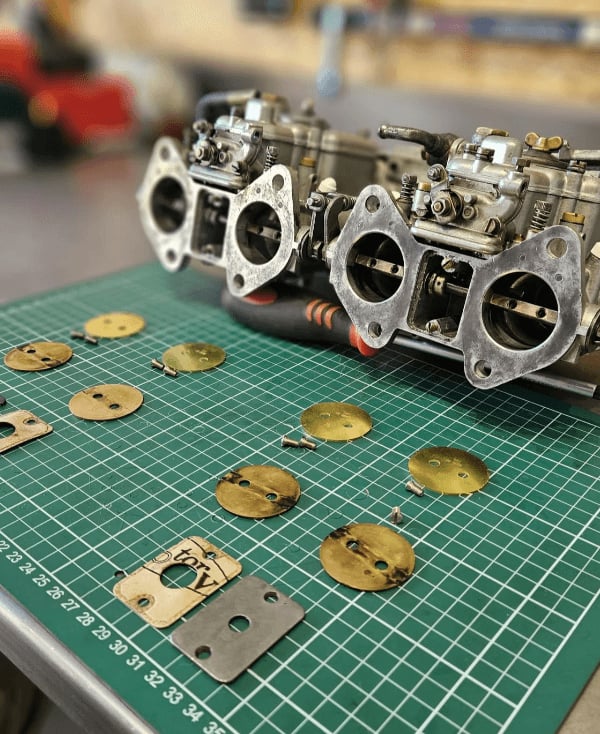
During an overhaul we bring everything up to the same standard: throttle spindles without play, spotless passages and throttle butterflies that open in sync. Only then does tuning make sense.
How a DCOE works: four circuits working together
A DCOE looks simple, but it delivers its fuel through several circuits that overlap across the entire rev range. Tune well and you know which circuit is doing the work at any moment:
- Idle circuit · with the throttle (nearly) closed, fuel is drawn in on the engine side of the butterfly.
- Progression circuit · the transition, through small holes just above the butterfly. This is also your mixture at a steady cruise. In practice the "idle jet" (marked with an F) mainly controls this, rather than the idle itself.
- Main circuit · at higher revs, where the depression in the venturi draws the fuel up through the emulsion tube.
- Accelerator pump · when you open up suddenly, a one-off squirt of fuel so there is no flat spot.
The emulsion tube is the clever heart of it all: as you head towards full throttle, the fuel level in the tube drops and more air holes are uncovered. More air blends in automatically and the mixture stays neatly around 12 to 13 (air to fuel), instead of drowning at the top of the rev range.
The detail that often gets skipped: the float height
If the float sits too high, the main circuit comes in too early, the progression is over-fed and the engine runs too rich at cruising speed, however much you change the jets. That is why we check the float height afresh at every overhaul, because even a different float needle or washer already changes the level. Only once that level is right does fine tuning make sense.
From Alfa to Jaguar to Ferrari
Every set gets the same attention here, whether it is an Alfa Romeo, a Jaguar E-Type Lightweight or a Ferrari with a past. To us it is all equally precise work, though examples like these do get an extra smile. By the way, you can also see the Webers from that special Ferrari in our Ferrari DCOE article.
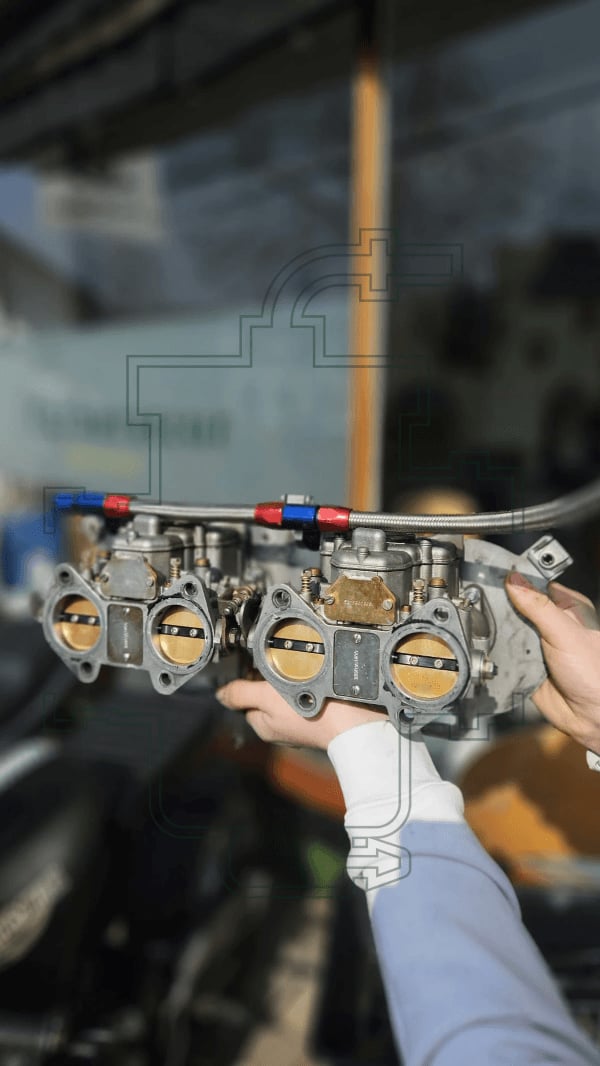
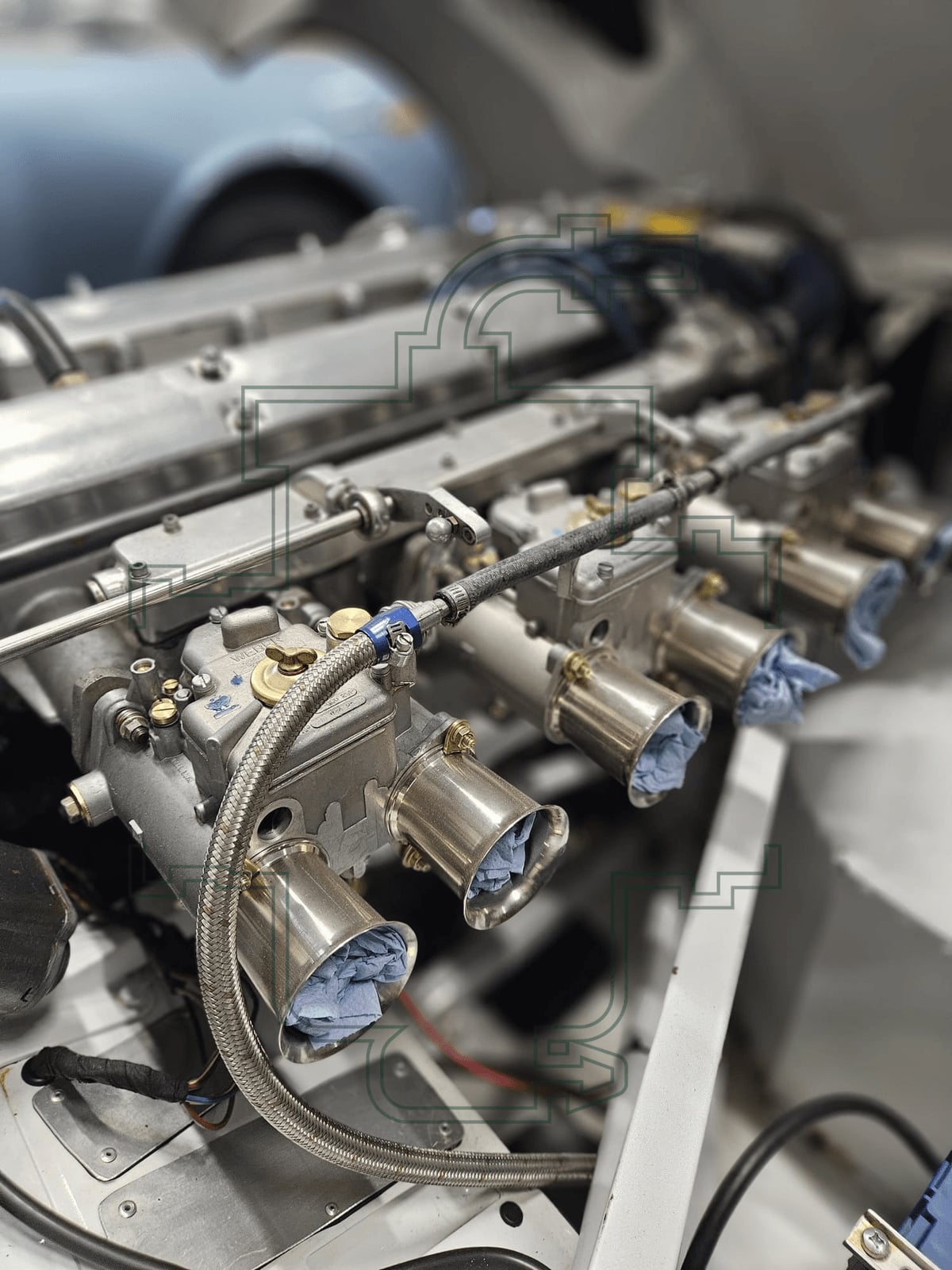
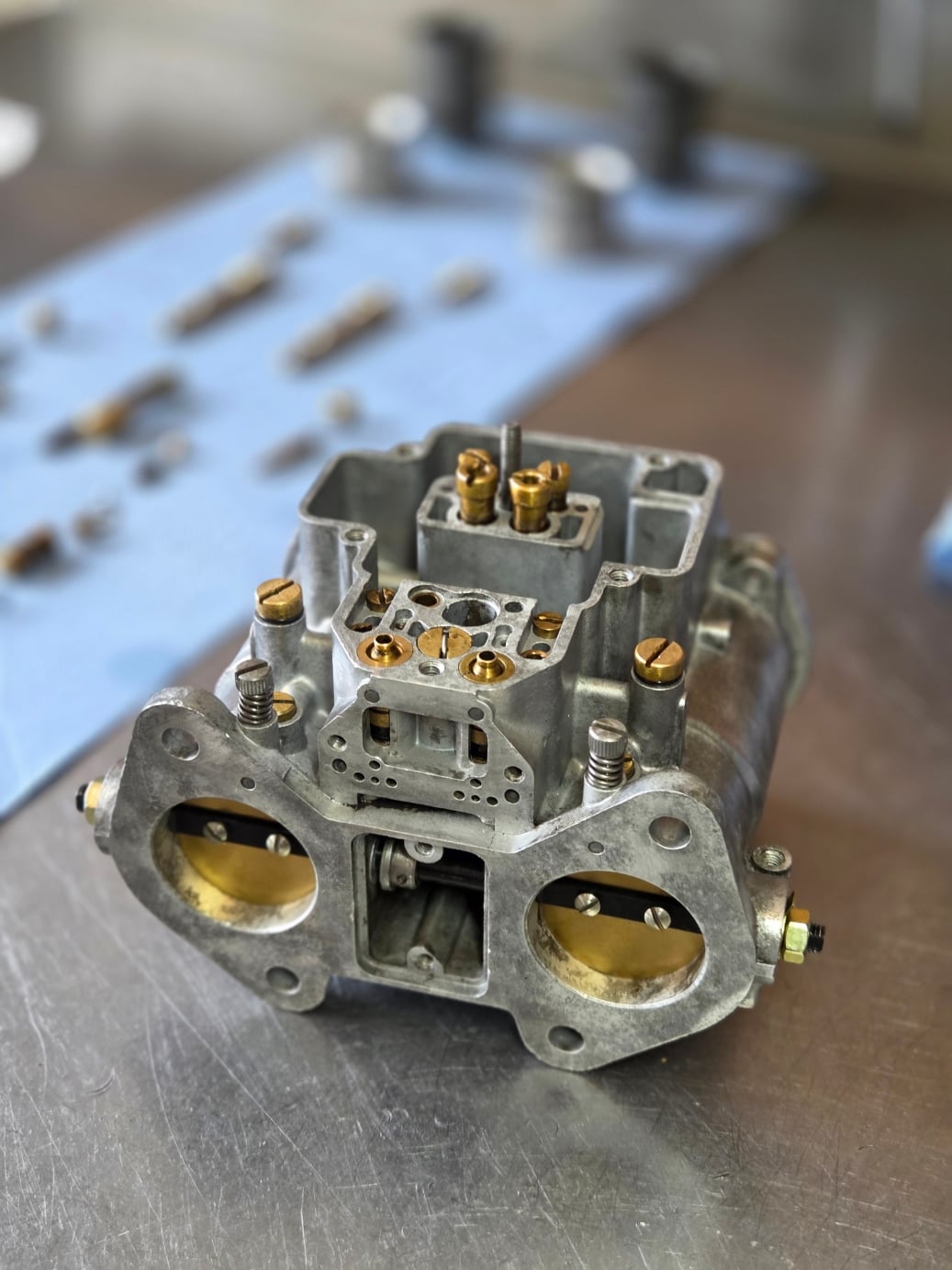
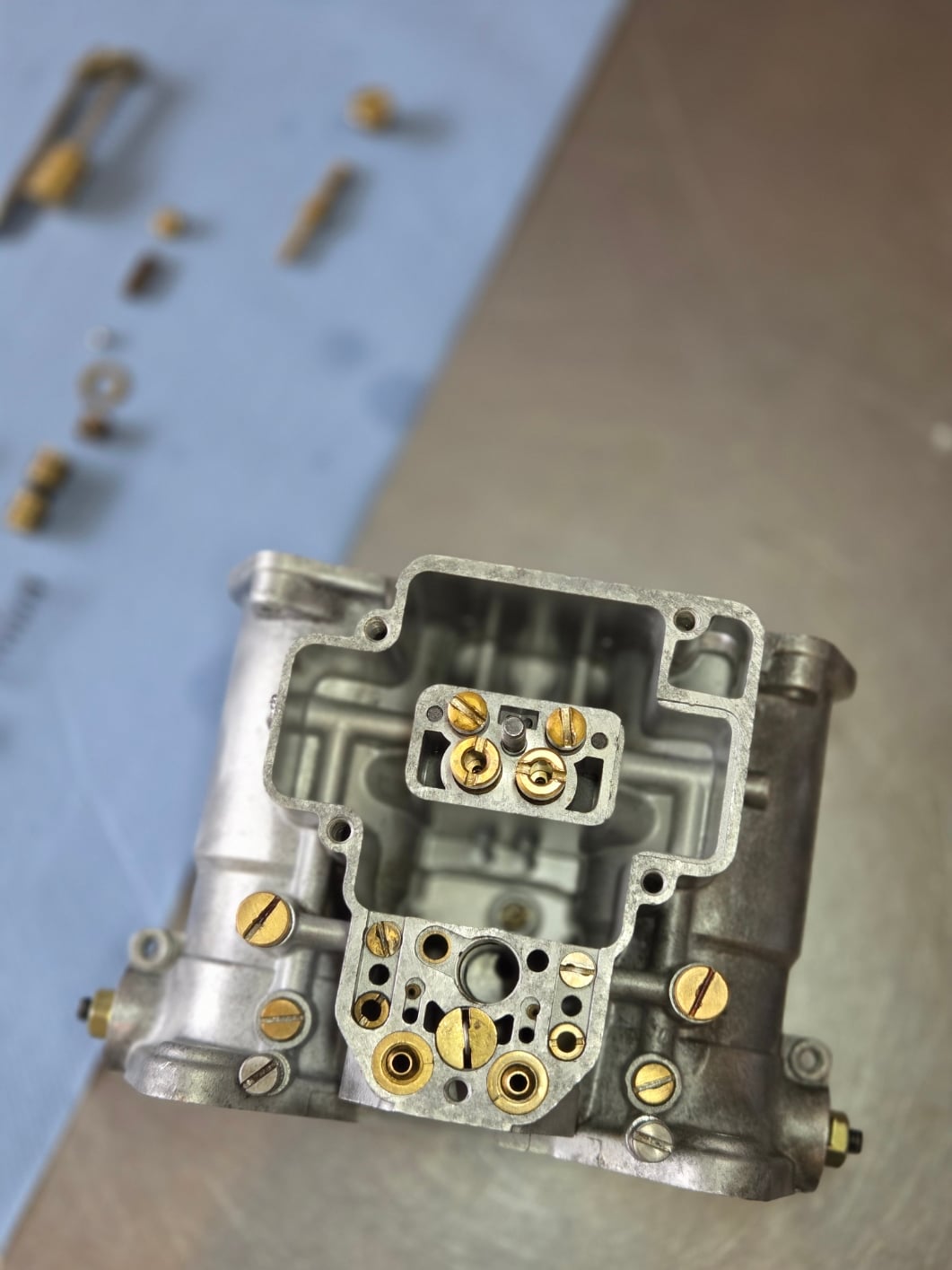
Tap a photo to see it larger.
Our approach: a proper overhaul, not a polish
Every Weber set gets the same complete treatment here:
- Complete disassembly down to the last screw
- Ultrasonic cleaning, so even the internal passages are spotless
- Inspection of the throttle spindle, floats, jets, emulsion tube and throttle body
- Worn parts replaced with A-quality service kits
- Throttle spindles without play, with made-to-measure bushes where needed
- Tuning and synchronising, matched to your engine
Got a set lying around?
Wondering whether your Weber set is still up to scratch, or would you like it overhauled and tuned? Send us a photo or video via WhatsApp or email and we will take a look with you, free of obligation. We love spanners, not secrets.