
We overhaul the Zenith Inat 35-40 completely: everything comes apart, goes through the ultrasonic bath and is rebuilt with a 36-part kit. Watch the short video below first, then see with your own eyes how dirty these carburettors arrive and how they leave our workbench.
Zenith Inat carburettors: German engineering, renewed down to the last ring
The Zenith Inat is a well-known two-stage carburettor that was fitted in the sixties, seventies and early eighties to various models from Mercedes-Benz, Opel and BMW. They are robustly built and strike a fine balance between comfort and power. At the same time, it is one of the more demanding carburettors on our workbench: many small passages, vacuum mechanisms and a set-up that wants to be spot on. They are rare too. These carburettors have been out of production for over forty years, so every good body is worth preserving. After decades of driving, long storage or minimal maintenance, a complete overhaul is the best foundation for many more years of driving. And that is exactly what we do.
Which cars came with the Zenith Inat?
These carburettors were common on mid-range and executive cars of German make. Think of:
Mercedes-Benz
- W114 and W115 such as the 250 and 280, produced from 1968 to 1976
- W123 250 models, between 1976 and 1985
Opel
- Commodore A and B, between 1967 and 1977
- Rekord C and D, produced between 1966 and 1977
BMW
- E3 and E9 models such as the 2500, 2800 and 3.0, from 1968 to 1977
They often sit in pairs on the engine: two Inats side by side working as a set, especially on the six-cylinder engines. Sometimes a single one is fitted, depending on the engine type and specification. Twin set-ups are overhauled as a set and matched to each other, so both carburettors pull evenly again.
This is how they arrive: deposits, rust and LPG traces
The photos below are real arrivals, exactly as they came out of the box. You can see hardened fuel residue in the float chamber, gaskets baked onto the surfaces, rust around the throttle body and white deposits on the needle valve. Click a photo to enlarge it, and use the arrows to browse through the whole row.
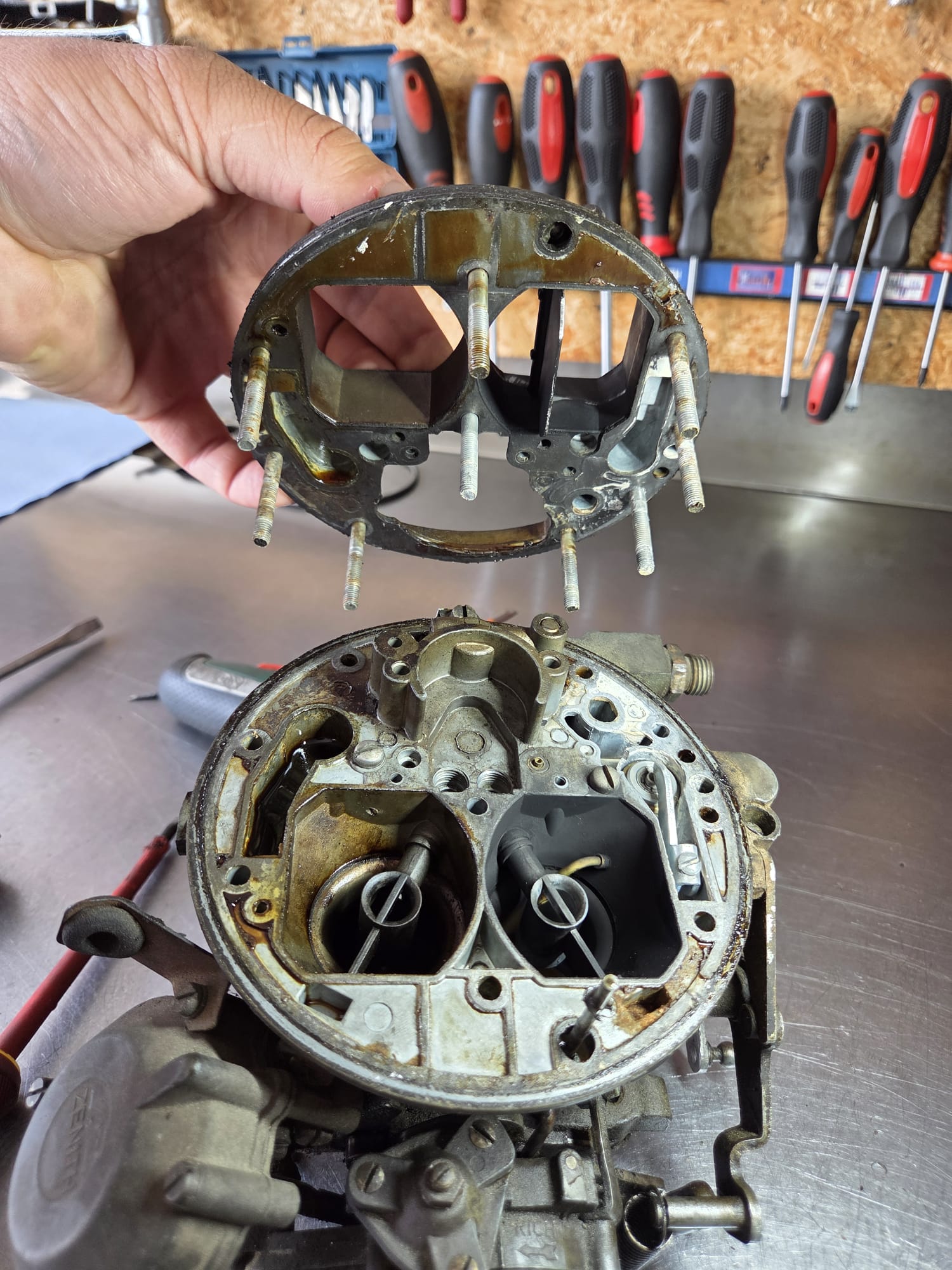
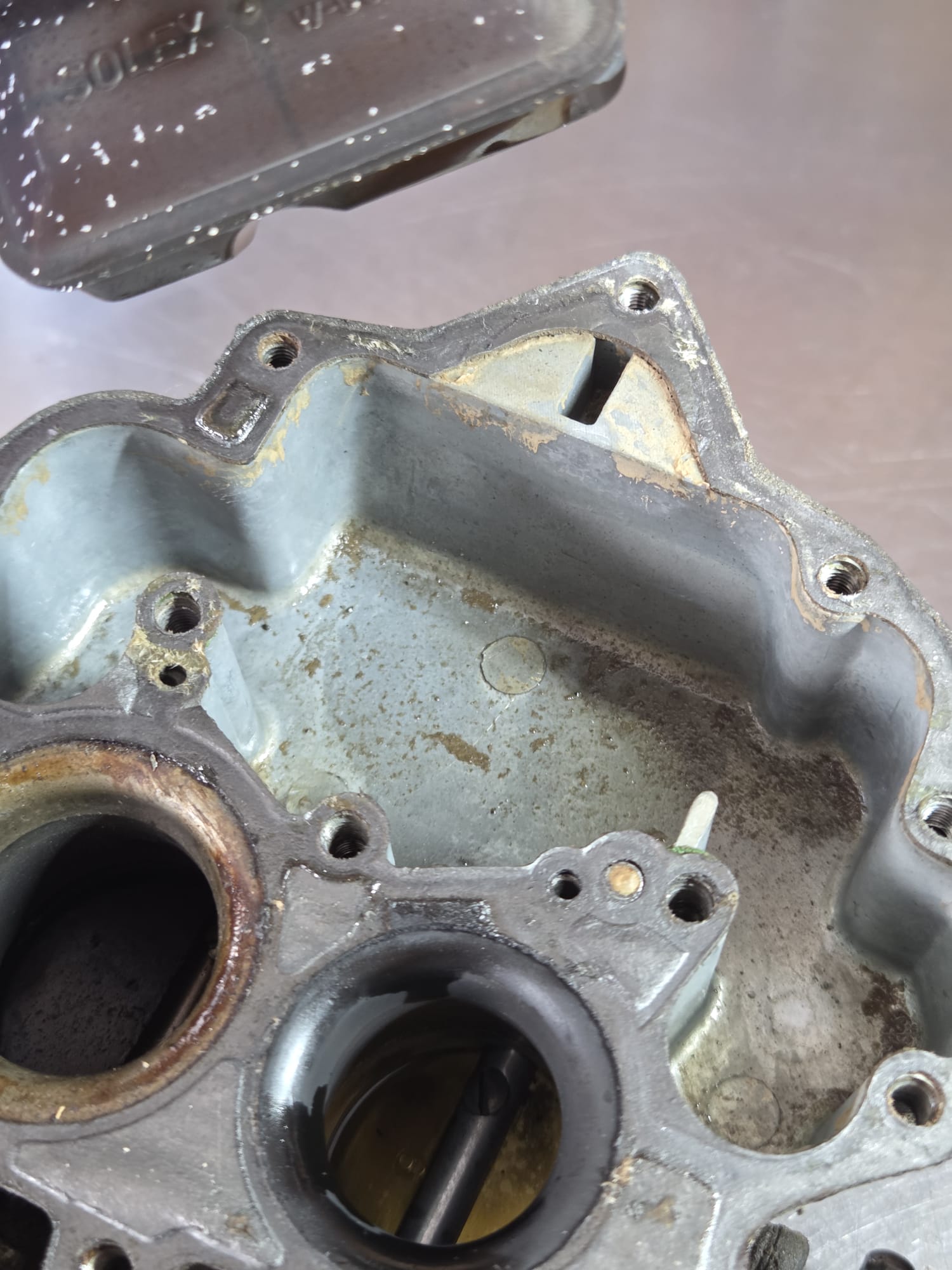
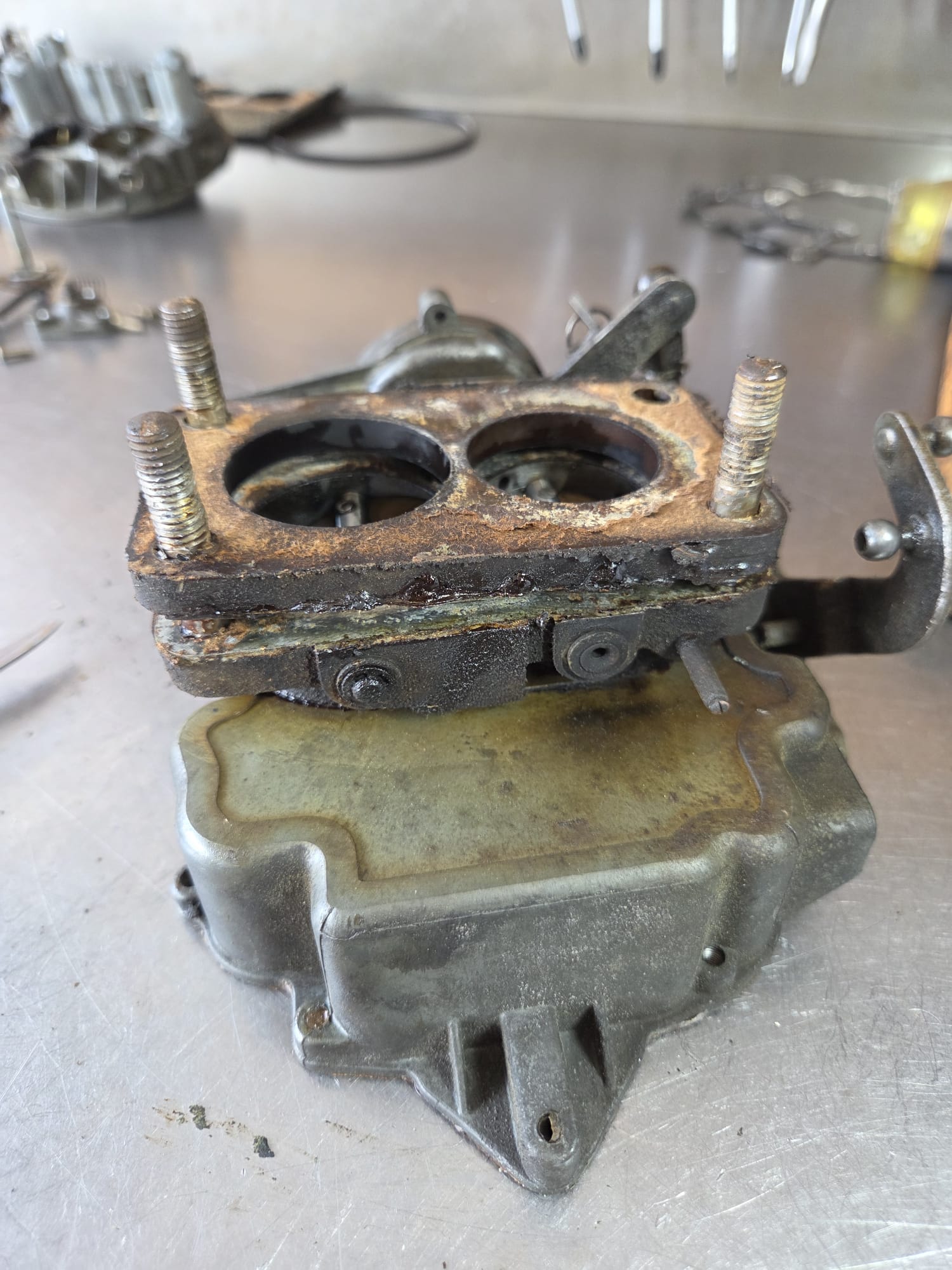
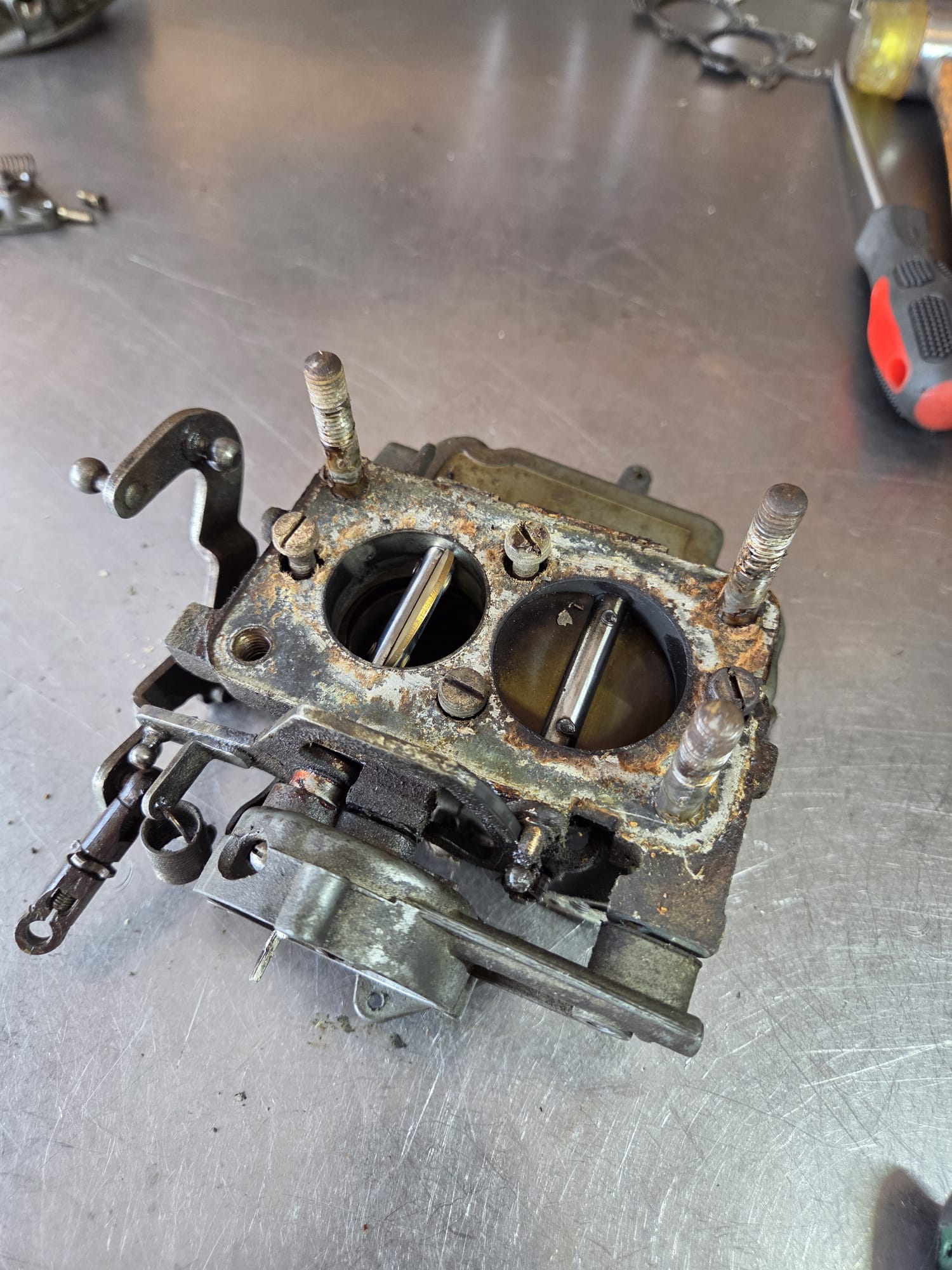
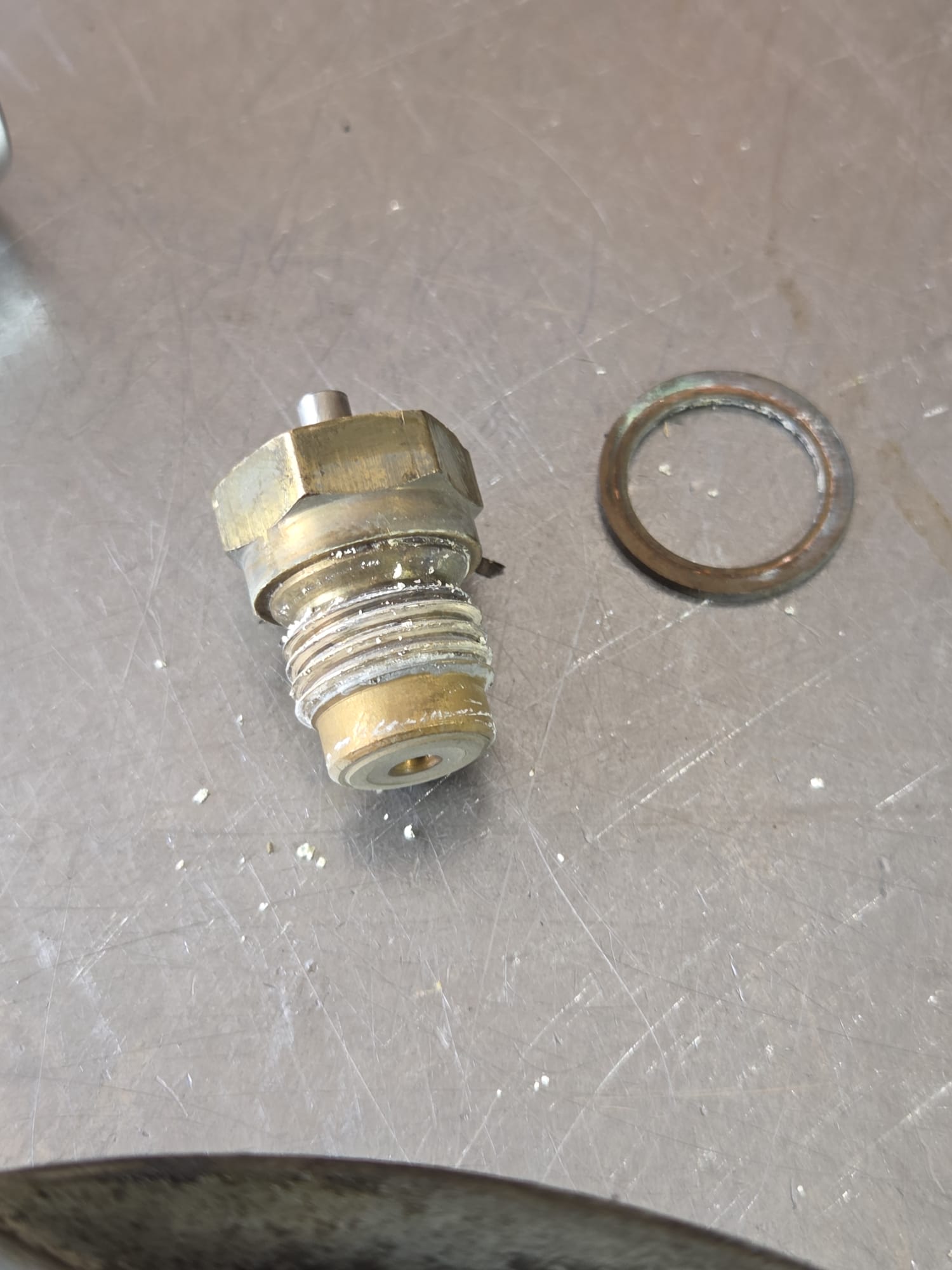
Many of these Mercedes and Opels ran on LPG for years. LPG burns hotter than petrol, and that extra heat can warp the gasket surfaces of the carburettor. That is why we measure all surfaces during every overhaul and machine them flat where needed, so everything seals perfectly again.
After the ultrasonic bath: ready for the rebuild
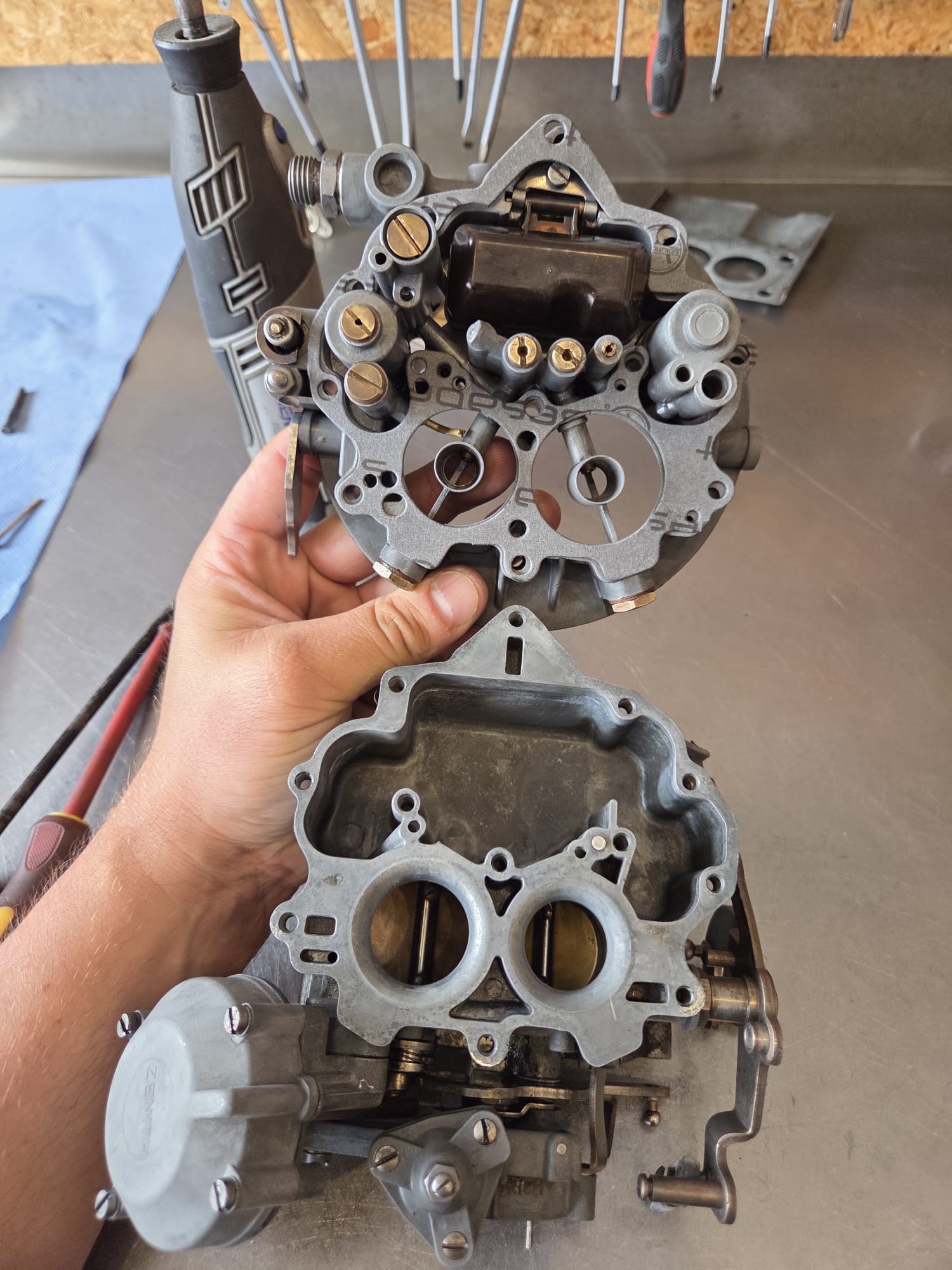
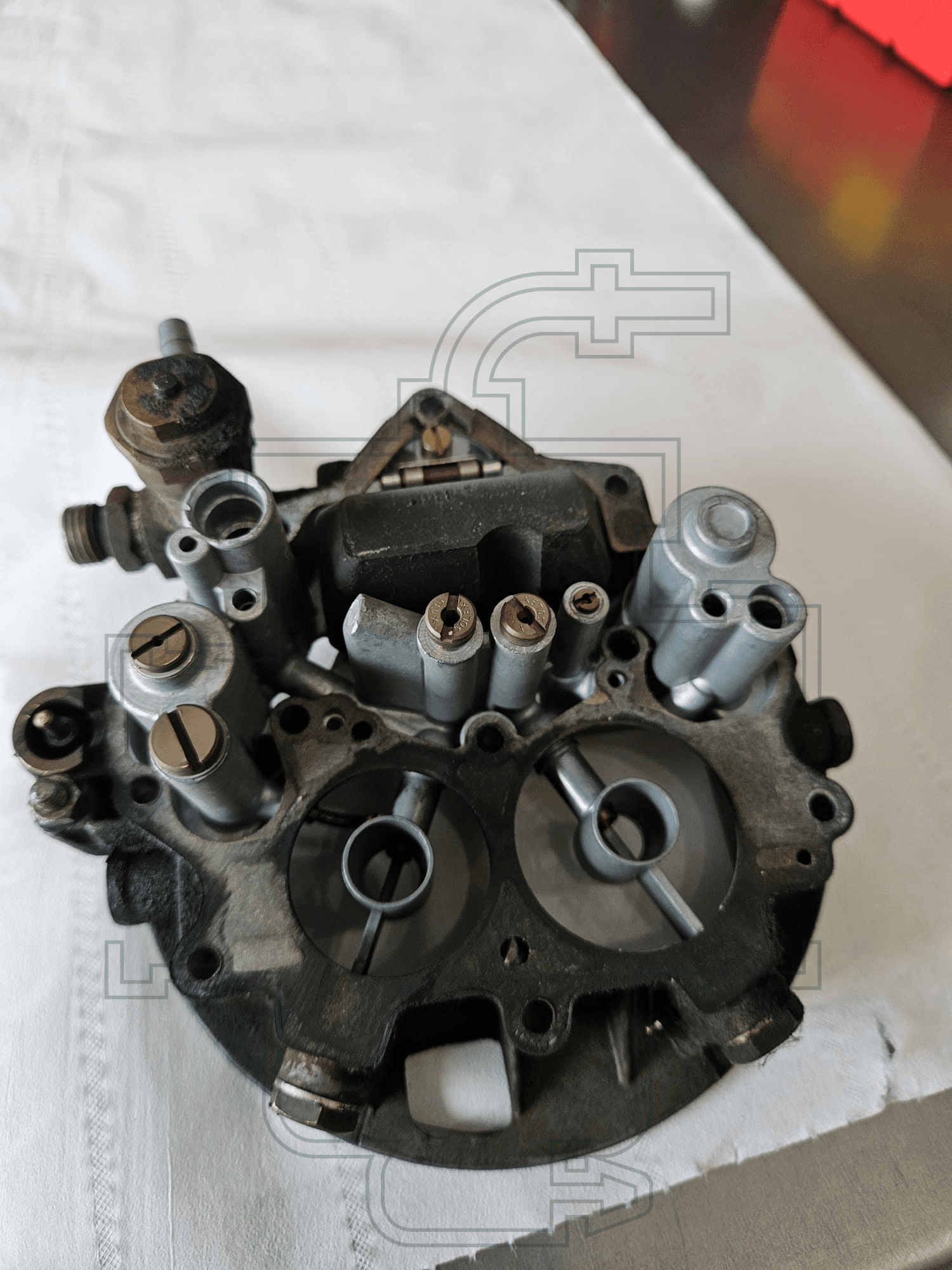
You can see the difference at a glance. On the left, a body exactly as it arrived, with green deposits and old gasket residue on the surface. On the right, the same view after the ultrasonic bath: bare aluminium and clean bores.
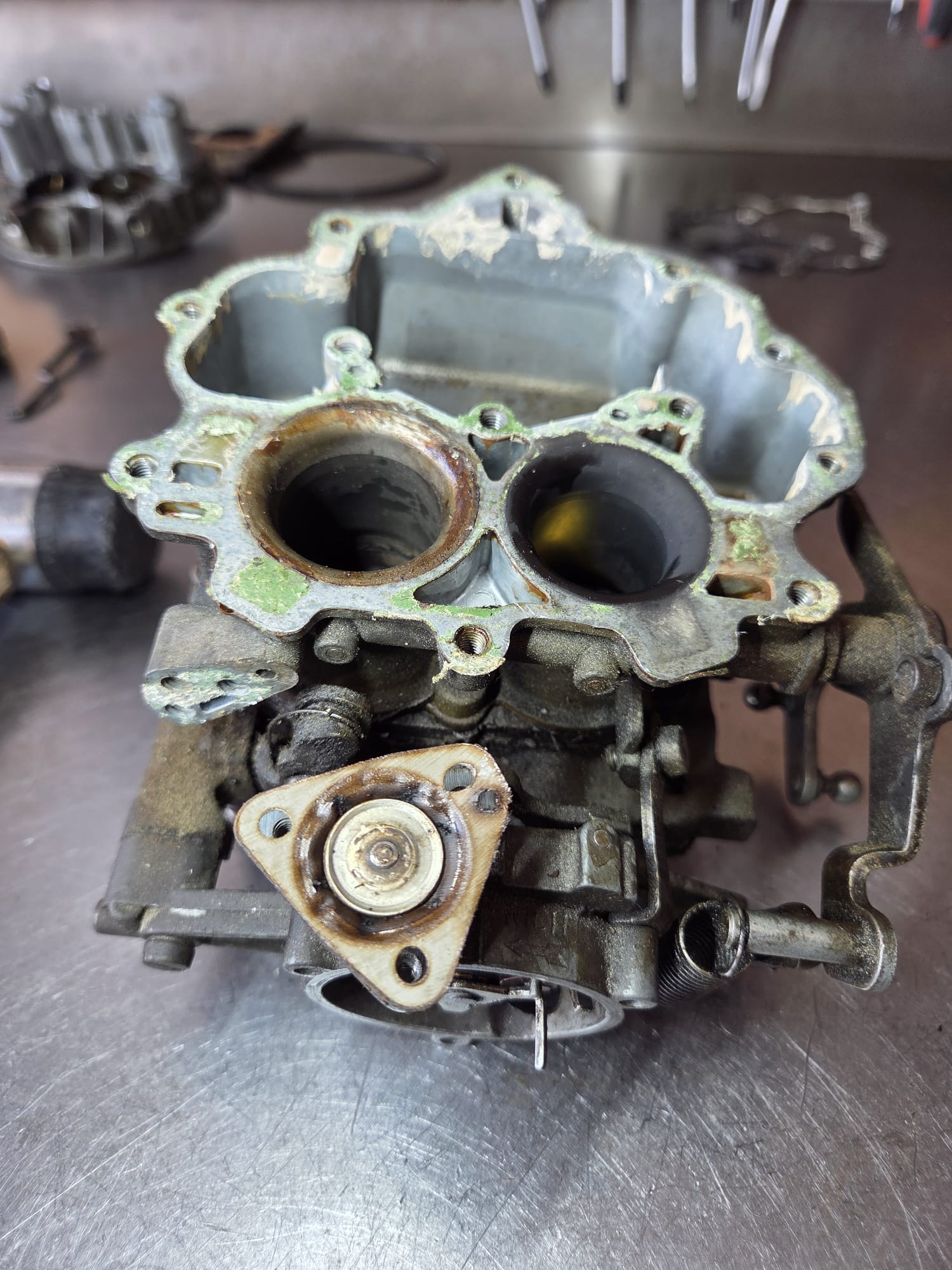
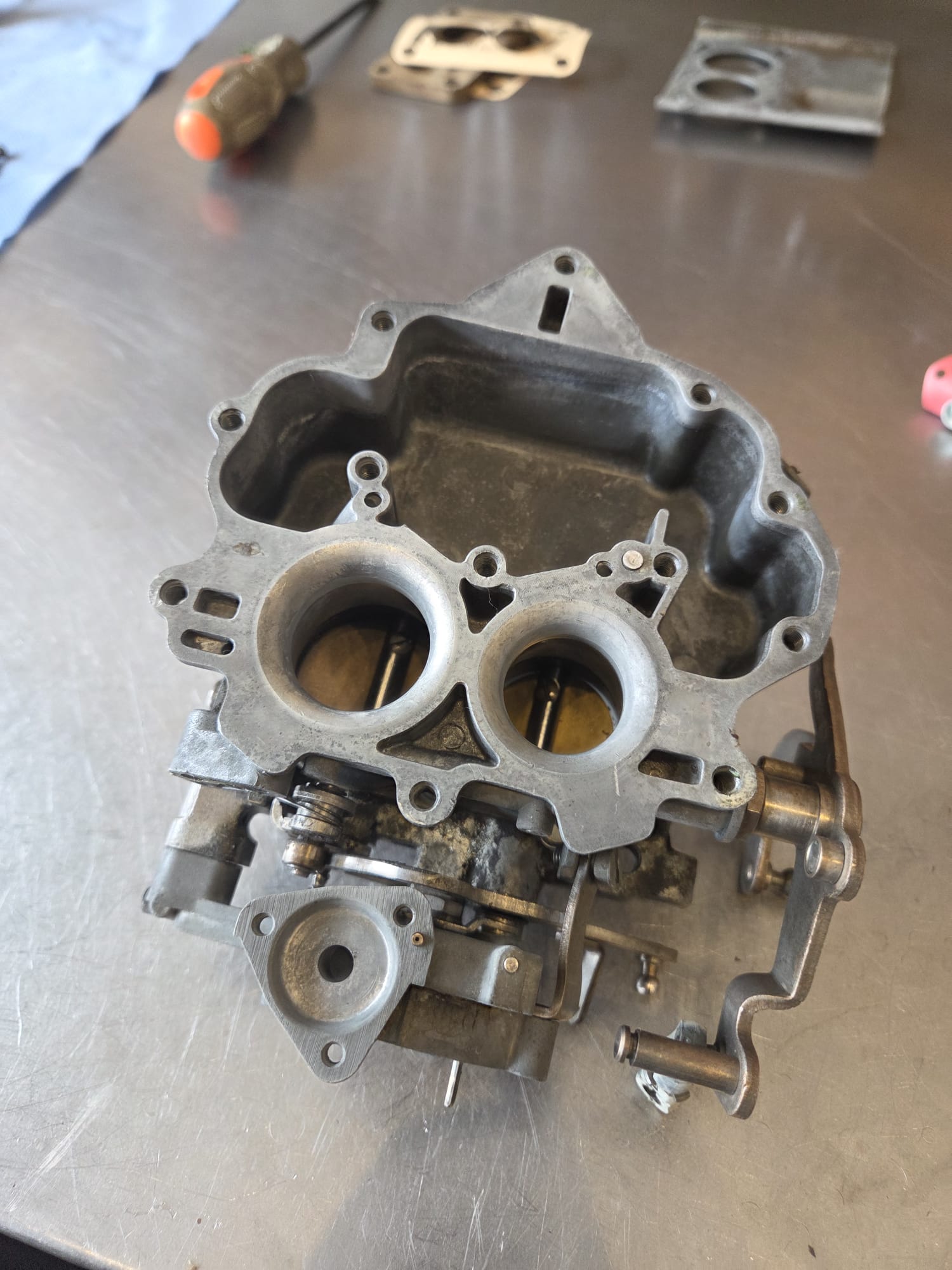
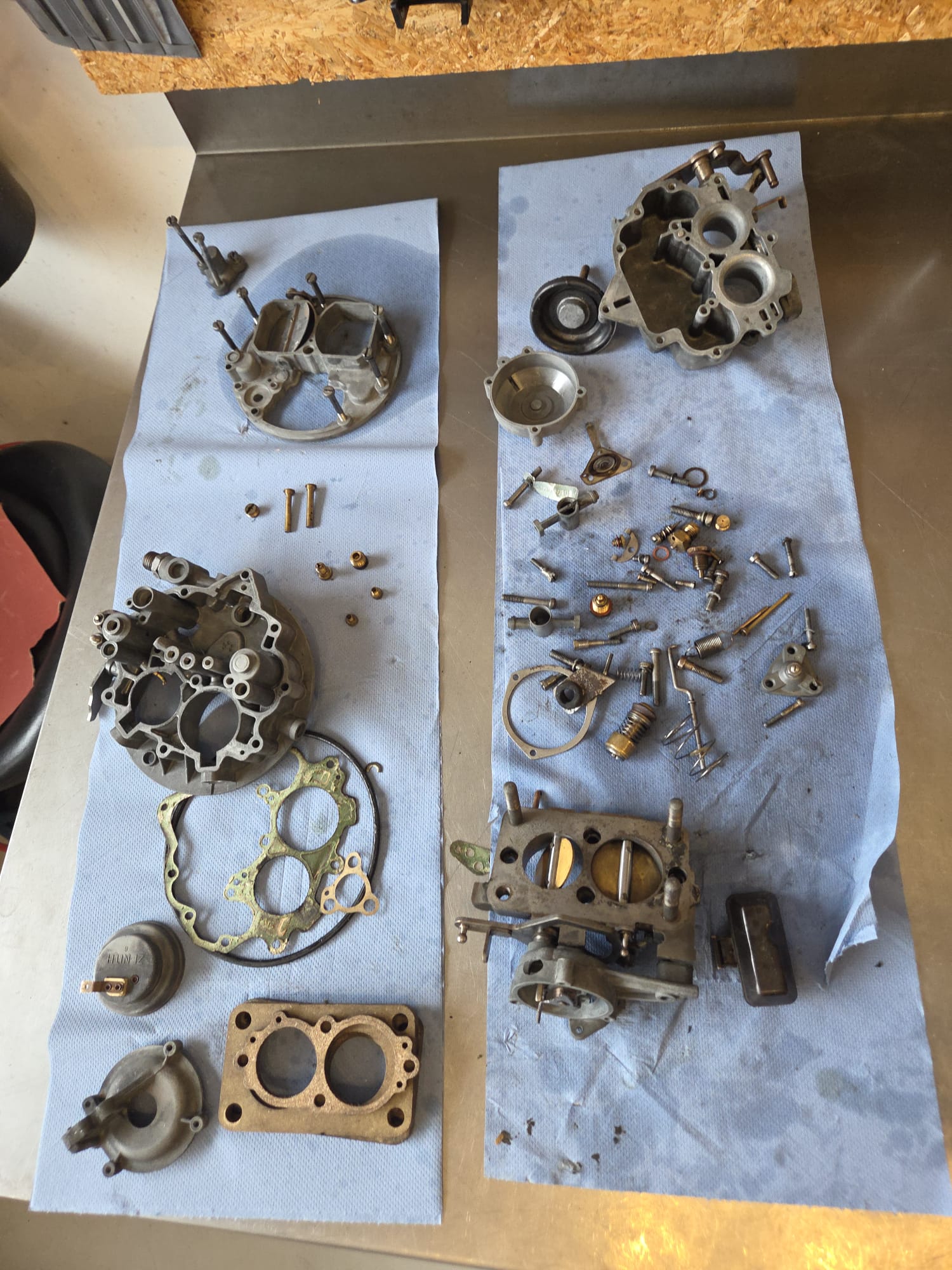
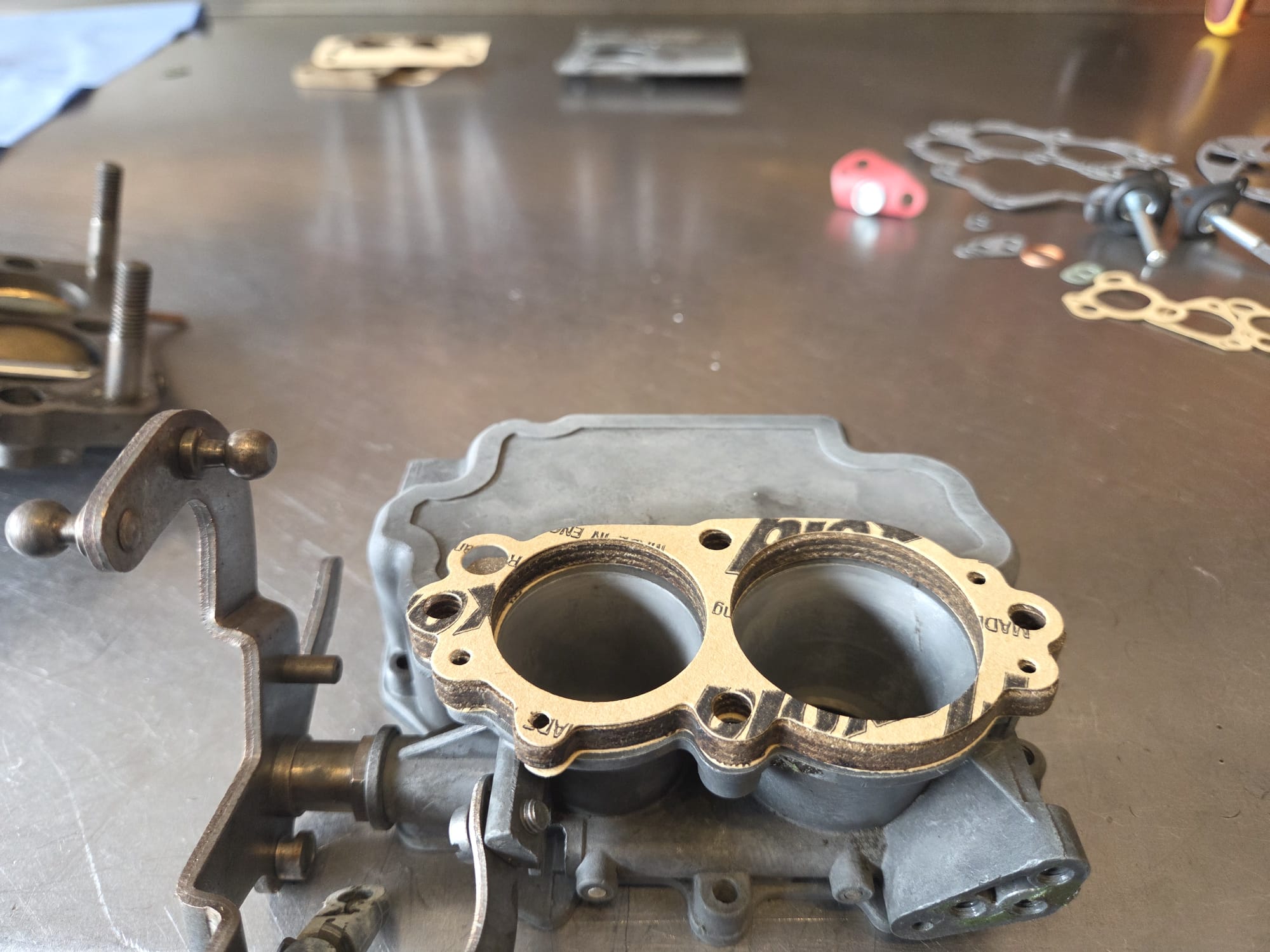
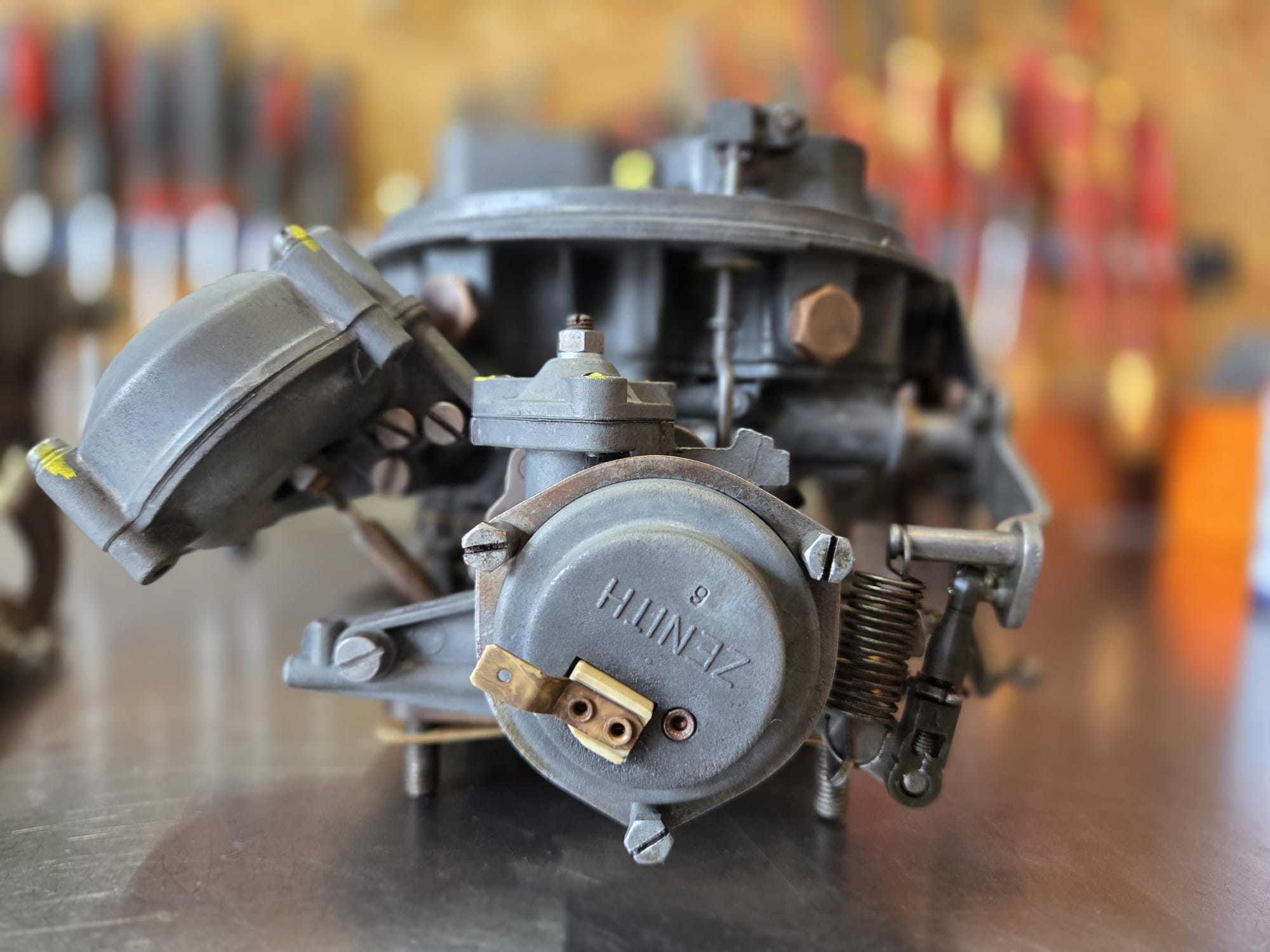
After disassembly, every part goes through the ultrasonic bath. The vibrations lift the dirt out of even the smallest passages, places that are hard to reach by hand. We then inspect every part, measure the surfaces and rebuild the carburettor with the 36-part kit.
A complete overhaul, down to the last ring
We overhaul the Zenith Inat completely, with a professional approach. Every overhaul takes an average of 14 hours of craftsmanship, in which we disassemble, clean, inspect and renew everything. The service kit we use consists of 36 new parts per carburettor, including:
- All rubber gaskets, fully resistant to modern fuels
- Fibre sealing rings
- Two new diaphragms for the accelerator pump
- Four new felt seals for the body sealing
- A float needle with a new seat
- Various rings, seals and O-rings
- Various springs
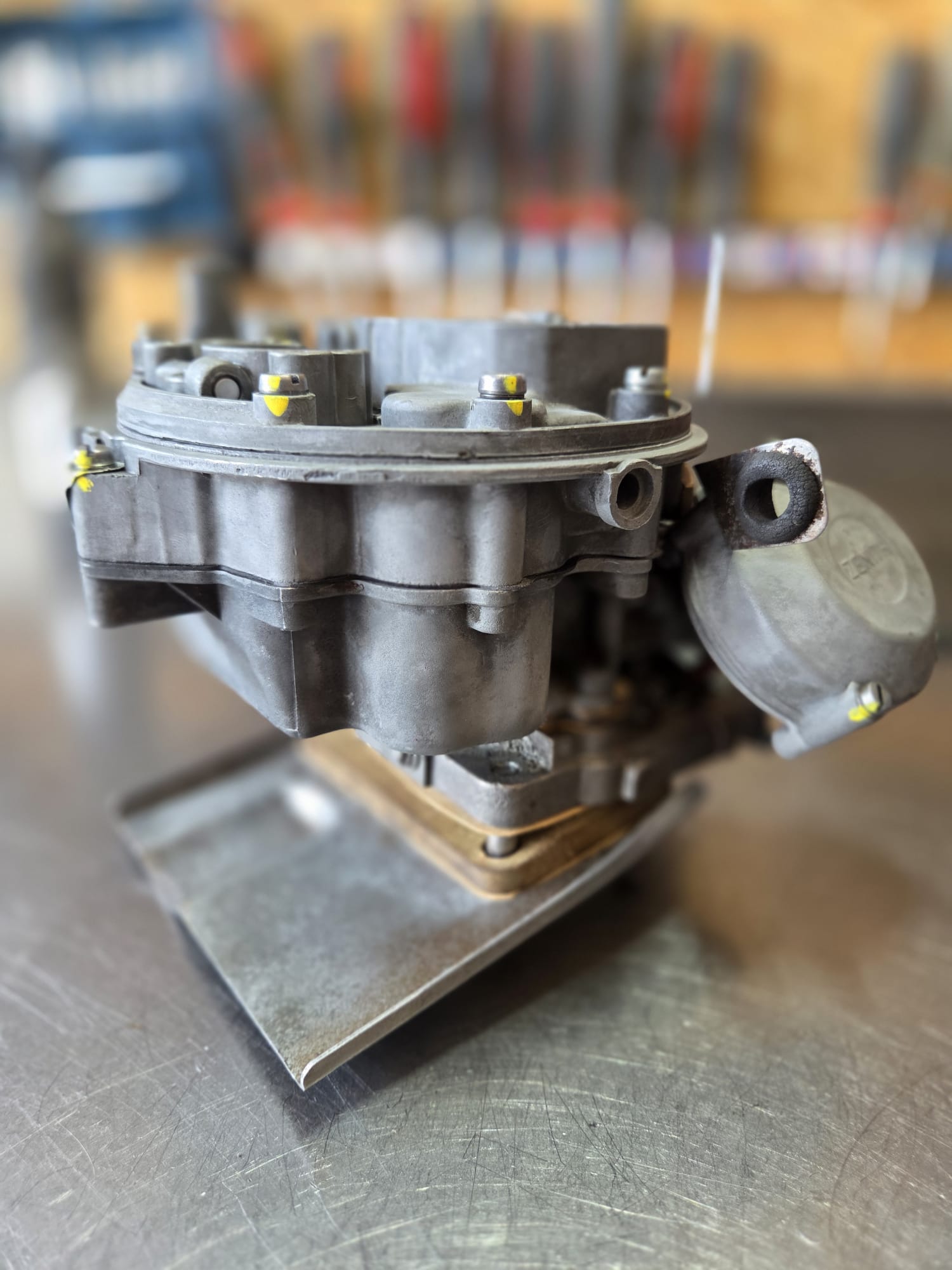
Everything is ultrasonically cleaned, checked for distortion and rebuilt with precision. If you wish, we also set the carburettors up on the engine after fitting.
Why choose our overhaul?
An old Inat that is hard to set up, suffers from leaks or runs unevenly keeps many classic car enthusiasts off the road. New examples have been unavailable for decades, so your carburettor deserves to be done properly. With our overhaul you get the maximum out of this dependable carburettor and let it do its work cleanly and crisply again. A thorough approach in which everything is new, except the body itself.
If the throttle spindles or their bearings in the body are worn, we can also re-bush the carburettor. That is extremely costly precision work, but it keeps the body going for another thirty years or so. Read all about it in our blog on re-bushing.
And of course you can also come to us for technical support or additional parts.