
Protect your classic against salt, damp and standing still by preparing it well before winter: drive the moisture out, fill the tank with stabiliser and have the carburettor checked. That way you head off rust, leaks and hard starting in spring.
Classic cars are more than vehicles, they are pieces of history on wheels. But their greatest enemies remain the same: salt, damp and standing still. During the winter months these factors can be devastating for steel, gaskets and fuel systems. In this article we share how to protect your classic and how we at Carburateur Service Nederland · your carburettor specialists in the Netherlands · get the carburettor ready for spring.
What happens while the car stands still
As soon as a classic stands still for a longer period, the wear begins unnoticed:
- Salt and damp attack the chassis, suspension and fuel tank.
- Fuel ages and leaves gum and varnish deposits in lines and carburettors.
- Rubbers and gaskets dry out, and leaks follow.
Without good preparation there is a fair chance the car will start poorly or run unevenly in spring.
Our approach at Carburateur Service Nederland
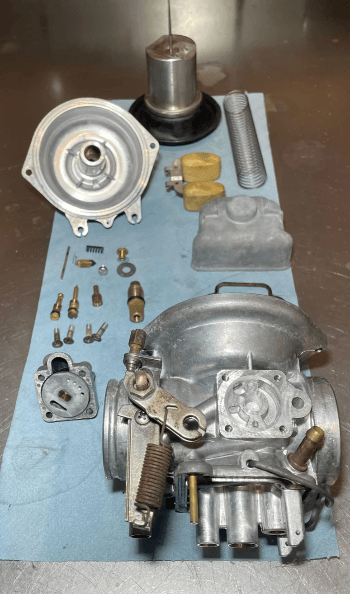
At Carburateur Service Nederland we see it every year: classics that run poorly after winter because the carburettor is dirty or gummed up. So we tackle it thoroughly:
- Cleaning and de-gumming: with ultrasonic cleaning we remove old fuel residues and dirt.
- New gaskets and seals: this keeps air leaks and fuel leaks out.
- Setting up: we set the carburettor exactly to the base settings from the manual.
That is how we bring classic engineering back to life, ready for spring.
Tips for winter storage
Want to stay ahead of damage yourself? Follow these basic steps:
- Take a good drive before storage to evaporate the moisture out of the exhaust.
- Go through the car wash with underbody cleaning and protection (a simple underbody wax).
- Fill the tank completely and add fuel stabiliser.
- Have the carburettor checked before winter and looked over again after winter.
- If you like, you can open the float chamber drain screws and let the petrol run out of the float chamber(s).
An hour of good maintenance often saves weeks of repairs.
From the workshop
Recently a customer arrived with a classic that refused to start after winter. The petrol had aged, the float needle was gummed solid and the carburettor was full of deposits. After a thorough clean, new gaskets and a proper set-up the engine ran like new again, ready for a fresh season.